What if protecting your overall health began with protecting the trillions of microorganisms living in and on your body—including the billions in your mouth?
Most people think brushing, flossing, and mouthwash are simply about preventing cavities and bad breath. But your mouth contains a complex ecosystem of bacteria, fungi, viruses, and other microorganisms collectively known as the oral microbiome.
This microscopic community plays an essential role in oral health and may influence health throughout your body.
The goal isn’t to eliminate every bacterium in your mouth. It’s to maintain a healthy microbial balance.
1. What Is the Oral Microbiome?
Your mouth is home to hundreds of microbial species. Some help maintain a healthy oral environment, while others can contribute to tooth decay, periodontal disease, and inflammation when conditions allow them to multiply excessively.
A balanced oral microbiome helps:
- Maintain healthy teeth and gum tissues.
- Support the mouth’s natural defenses against harmful microorganisms.
- Contribute to healthy saliva function.
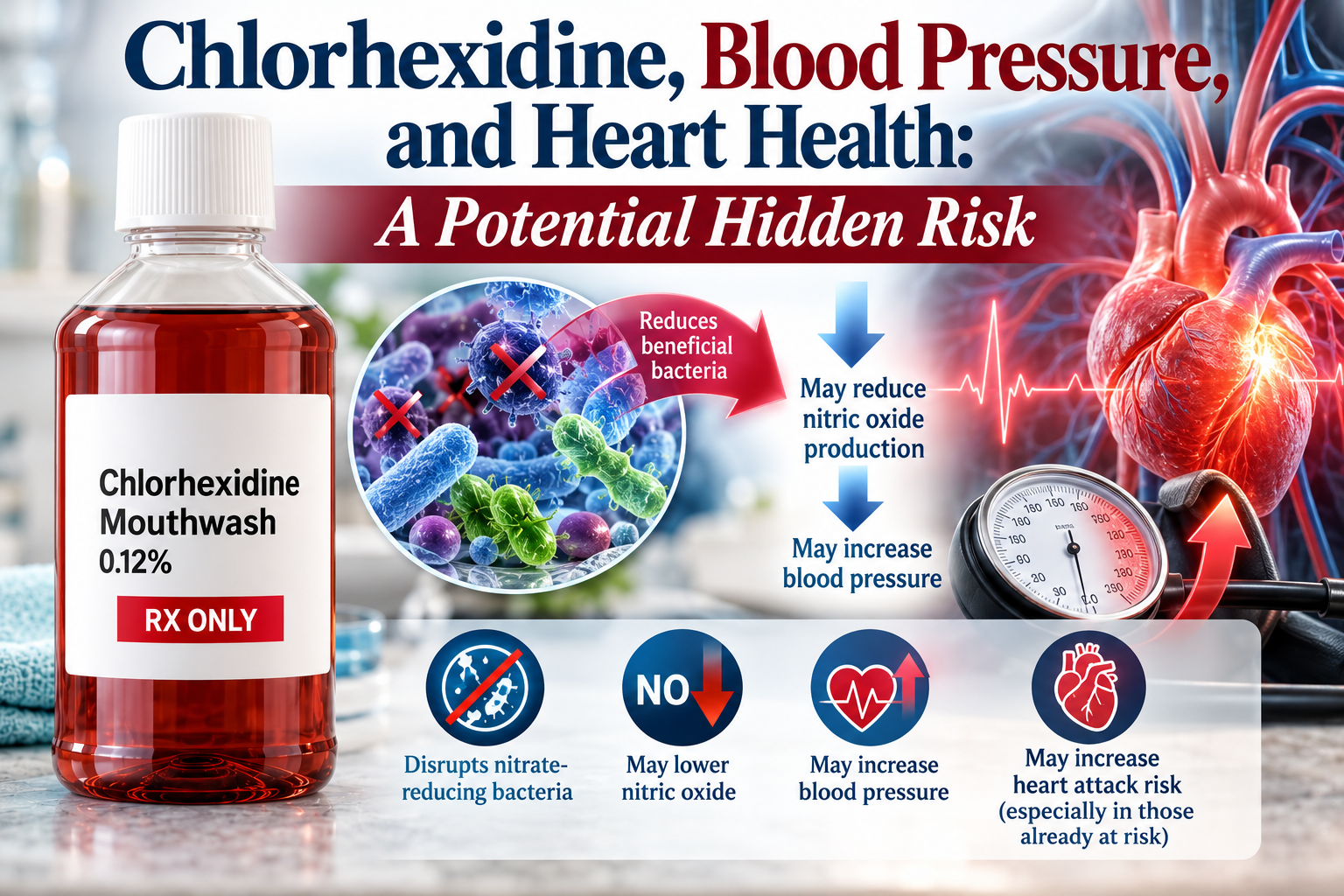
- Support the nitrate-to-nitric-oxide pathway, which plays a role in cardiovascular health.
- Maintain microbial diversity and discourage the overgrowth of disease-associated bacteria.
Think of your oral microbiome as a garden. When the environment is healthy, beneficial microorganisms flourish. When the environment becomes unbalanced, disease-associated organisms can take over.
This imbalance is called oral dysbiosis.
2. How Does an Unhealthy Oral Microbiome Develop?
Your oral microbiome responds to your daily habits and overall health.
Several factors can disrupt its natural balance:
- Inadequate brushing and interdental cleaning.
- Frequent consumption of sugar and refined carbohydrates.
- Smoking and tobacco use.
- Dry mouth and reduced saliva production.
- Certain medications and medical conditions.
- Untreated periodontal disease.
- Changes in the mouth’s acidity and oxygen availability.
As harmful microbial communities develop, they can form organized structures called biofilms, commonly known as dental plaque.
When these biofilms are not adequately controlled, they can contribute to gingivitis, periodontal disease, tooth decay, and chronic oral inflammation.
Importantly, the solution isn’t simply to kill more bacteria. It is to create an environment that supports microbial balance while controlling disease-associated organisms.
3. The Mouth-Heart Connection
One of the most important reasons to maintain a healthy oral microbiome is its relationship with cardiovascular health.
Periodontal disease is associated with cardiovascular disease, although research has not established that periodontal treatment directly prevents heart attacks or strokes.
There are several potential biological connections.
Inflamed periodontal tissues can allow oral bacteria and their components to enter the bloodstream. Periodontal inflammation can also contribute to the body’s overall inflammatory burden.
Researchers continue to investigate how these processes may interact with cardiovascular disease.
This highlights an important principle: protecting your oral microbiome involves supporting beneficial bacteria, not indiscriminately eliminating them.
4. The Mouth-Brain Connection
Scientists are also investigating relationships between oral health, chronic inflammation, cognitive decline, and Alzheimer’s disease.
Some research has identified associations between periodontal disease and cognitive impairment. Investigators have also studied periodontal pathogens and their components in relation to neurological inflammation.
However, these findings do not establish that oral bacteria cause Alzheimer’s disease or that treating periodontal disease prevents dementia.
The evidence does reinforce the importance of oral health as part of comprehensive preventive healthcare.
For older adults, maintaining healthy teeth and gums also supports comfortable eating, adequate nutrition, communication, and quality of life.
Protecting the aging mouth is an important component of healthy aging.
5. The Oral Microbiome and Diabetes
The relationship between periodontal disease and diabetes is particularly important because it works in both directions.
Poorly controlled diabetes can increase susceptibility to periodontal disease and make periodontal inflammation more difficult to manage.
Periodontal inflammation may, in turn, make blood glucose management more challenging.
Research suggests that periodontal treatment can modestly improve glycemic control in some people with type 2 diabetes.
This relationship illustrates why dental and medical professionals should collaborate rather than treat oral and systemic conditions independently.
6. Oxygen, Acidity, and the Oral Environment
Not all bacteria thrive under the same conditions.
Some periodontal pathogens favor low-oxygen environments, such as deep periodontal pockets. Other microorganisms thrive in different conditions and contribute to a healthy oral ecosystem.
Oxygen availability, acidity, saliva, nutrition, and microbial interactions all influence which microorganisms flourish.
However, the relationship is complex. Not all anaerobic bacteria are harmful, and simply increasing oxygen exposure does not eliminate periodontal disease.
Similarly, maintaining an appropriate oral pH is important because frequent acid exposure can contribute to enamel demineralization.
A comprehensive oral-care strategy should therefore support a balanced microbial environment without exposing teeth to unnecessary acidity or damaging healthy oral tissues.
7. Five Steps to Protect Your Oral Microbiome
Maintaining a healthy oral microbiome requires consistent daily habits and professional care.
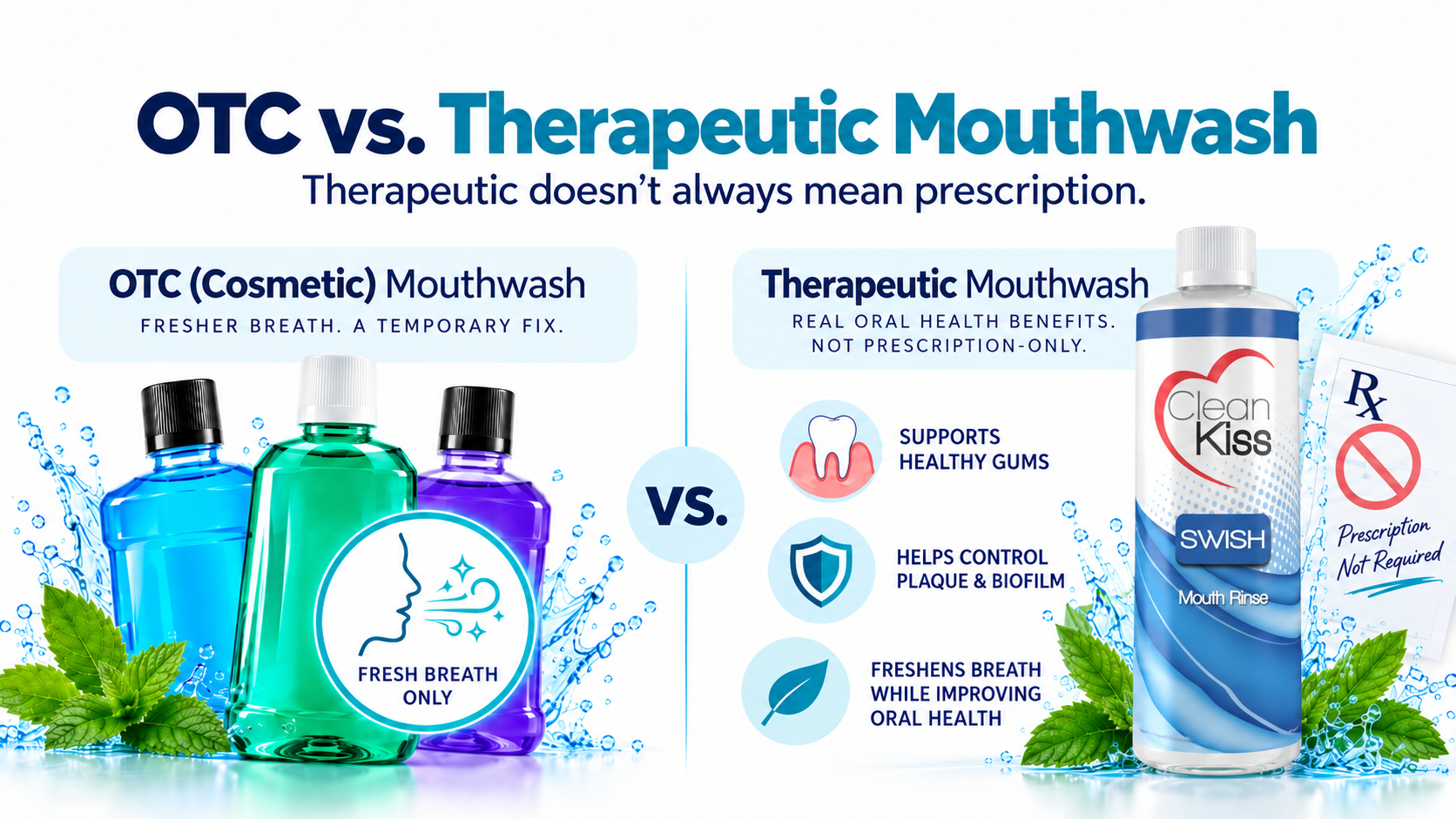
Step 1: Swish thoughtfully.
Choose oral-care products appropriate for your individual needs. Mouthwash can complement brushing and flossing, but it cannot replace mechanical plaque removal.
Patients with periodontal disease should follow their dental professional’s recommendations regarding therapeutic rinses.
Step 2: Floss at least once daily.
Cleaning between teeth helps disrupt bacterial biofilms in areas that toothbrushes cannot adequately reach.
Interdental brushes may be particularly useful for patients with larger spaces between teeth or periodontal attachment loss.
Step 3: Brush twice daily.
Brush gently for two minutes using a soft-bristled toothbrush and an evidence-based toothpaste appropriate for your cavity risk.
Fluoride toothpaste remains an established option for preventing tooth decay.
Step 4: Support your microbiome through nutrition.
Limit frequent sugar consumption, stay hydrated, and eat a varied diet rich in vegetables and other nutrient-dense foods.
Dietary nitrates found in leafy vegetables may also support the oral nitrate-reducing pathway.
Step 5: Monitor your periodontal health.
Professional periodontal evaluations help identify inflammation, attachment loss, and periodontal pockets that may not produce noticeable symptoms.
Patients with established periodontal disease may require individualized periodontal maintenance and additional treatment.
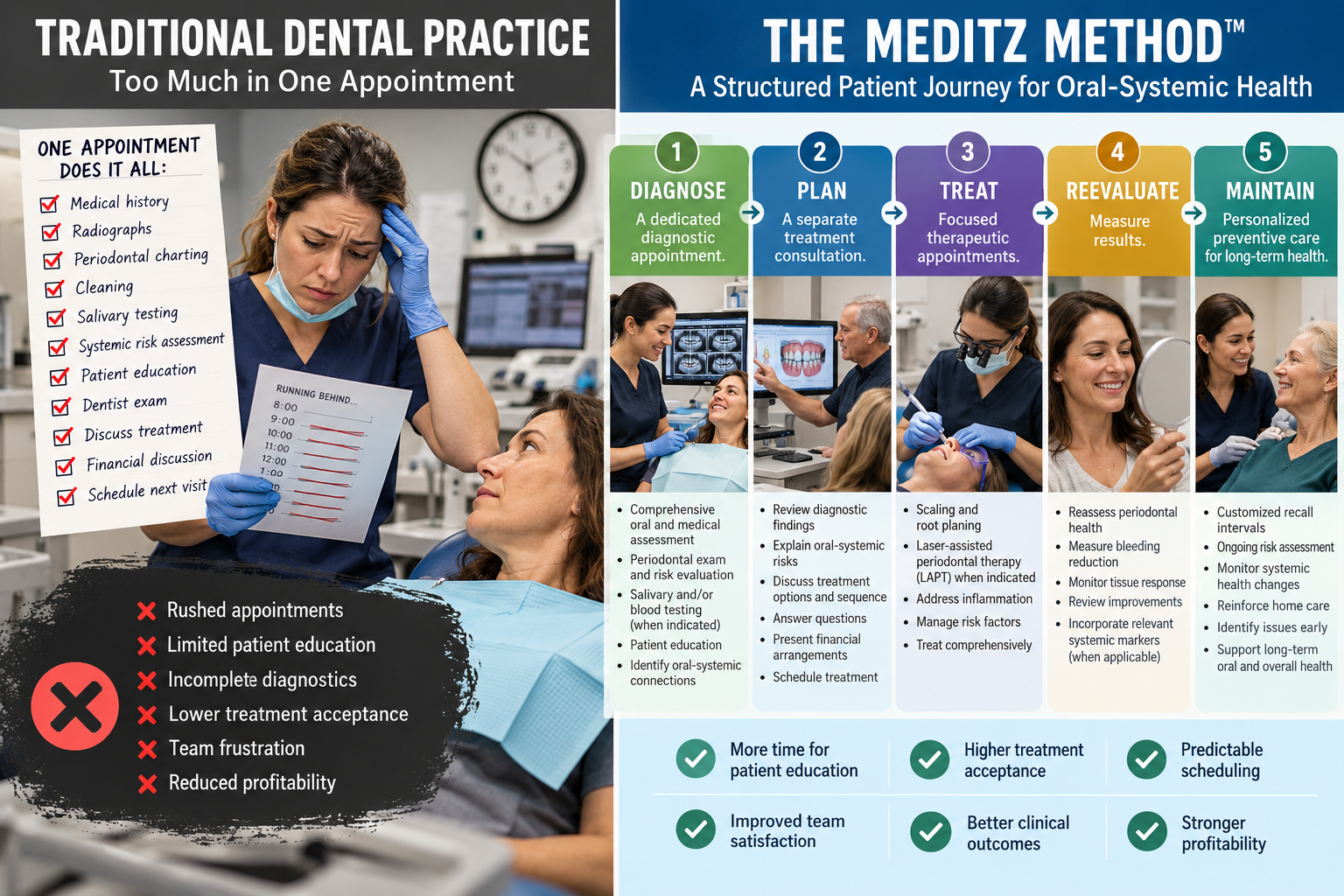
8. The Meditz Method™: Connecting Oral Health to Whole-Body Health
The Meditz Method™ emphasizes an integrated approach to oral-systemic health.
Rather than focusing exclusively on teeth and gums, the method encourages dental professionals to consider the patient’s broader health history, inflammatory conditions, metabolic health, periodontal status, and daily oral-care practices.
It also encourages collaboration with medical professionals when appropriate.
For patients with periodontal disease, diabetes, cardiovascular risk factors, or dental implants, coordinated care can help identify problems earlier and support more comprehensive treatment planning.
The oral microbiome is an important part of this approach because it helps explain why maintaining healthy oral tissues requires more than simply eliminating bacteria.
It requires understanding and managing the environment in which those microorganisms live.
The Bottom Line: Protect the Balance
Your oral microbiome is not your enemy. It is an essential part of your oral ecosystem.
When microbial balance is disrupted, oral diseases can develop, potentially adding to the inflammatory burden associated with other health conditions.
Protecting your oral microbiome means practicing effective daily hygiene, maintaining healthy saliva function, choosing appropriate oral-care products, receiving professional periodontal care, and recognizing the importance of medical-dental collaboration.
A healthier mouth is an important part of a healthier body.
That is the foundation of The Meditz Method™: connecting dentistry and medicine to create a more comprehensive culture of prevention.
Learn more about The Meditz Method™ and the importance of oral-systemic health.