The Missing Link in Wellness Coaching: Why Oral Health Belongs in Every Whole-Body Wellness Plan
Bridging the Gap Between the Mouth and Body Through Wellness Coach–Dentist Co-Advocacy
Wellness coaches help people transform their health through better nutrition, exercise, sleep, stress management, and sustainable lifestyle changes. But what if one of the most important pieces of the wellness puzzle is being overlooked?
The mouth.
While wellness professionals focus on helping clients reduce inflammation, improve metabolic health, and prevent chronic disease, millions of people may be living with oral inflammation that has never been addressed as part of their overall wellness strategy.
The mouth is not separate from the body. It is part of the body’s interconnected biological system. Yet dentistry and wellness coaching often operate in entirely different worlds.
That disconnect represents an opportunity for wellness coaches to make an even greater impact—without becoming dental professionals.
The Mouth–Body Connection: Why Wellness Coaches Should Care
The oral cavity is home to a complex community of microorganisms known as the oral microbiome. When properly balanced, this ecosystem helps support oral health. When disrupted, harmful bacterial communities can contribute to periodontal (gum) disease and chronic inflammation.
Periodontal disease is more than a problem with bleeding gums or loose teeth. Research has identified important relationships between periodontal inflammation and several systemic conditions, including:
- Cardiovascular disease: Periodontal disease is associated with cardiovascular risk, although a direct cause-and-effect relationship has not been established.
- Diabetes: The relationship is especially important because diabetes can increase susceptibility to gum disease, while periodontal treatment may help improve blood glucose control.
- Alzheimer’s disease and cognitive decline: Researchers are investigating connections involving oral pathogens, inflammation, and neurodegenerative conditions.
- Rheumatoid arthritis: Periodontal disease and rheumatoid arthritis share inflammatory pathways that continue to attract scientific attention.
- Pregnancy complications: Poor periodontal health has been associated with certain adverse pregnancy outcomes, although treatment has not consistently been shown to prevent them.
These connections do not mean gum disease directly causes every associated condition. They do mean that oral health deserves a place in conversations about whole-body wellness.
A wellness plan that overlooks oral health may be overlooking an important contributor to a client’s overall health picture.
Expanding Wellness Coaching Without Crossing Professional Boundaries
Wellness coaches do not need to diagnose periodontal disease, interpret dental X-rays, or recommend dental treatments to make oral health part of their services.
Their greatest contribution may be helping clients recognize the importance of oral health, develop healthier habits, and connect with qualified dental professionals.
Consider incorporating a few simple questions into an existing wellness intake or lifestyle assessment:
- When was your last comprehensive dental examination?
- Do your gums bleed when brushing or flossing?
- Have you ever been diagnosed with periodontal disease?
- Do you have dental implants, and are they being monitored regularly?
- Has your dentist discussed the relationship between oral health and conditions such as diabetes or cardiovascular disease?
- Are you comfortable with your current daily oral-care routine?
These questions are not intended to diagnose disease. They open conversations that clients may never have considered relevant to their wellness goals.
A client who reports bleeding gums, for example, can be encouraged to schedule a dental evaluation rather than assuming that bleeding is normal.
A client struggling with diabetes management might benefit from understanding why dental care is an important component of comprehensive diabetes care.
And a client with dental implants may not realize that implants require ongoing professional maintenance and monitoring for peri-implant disease.
Introducing Co-Advocacy: Wellness Coaches and Dentists Working Together
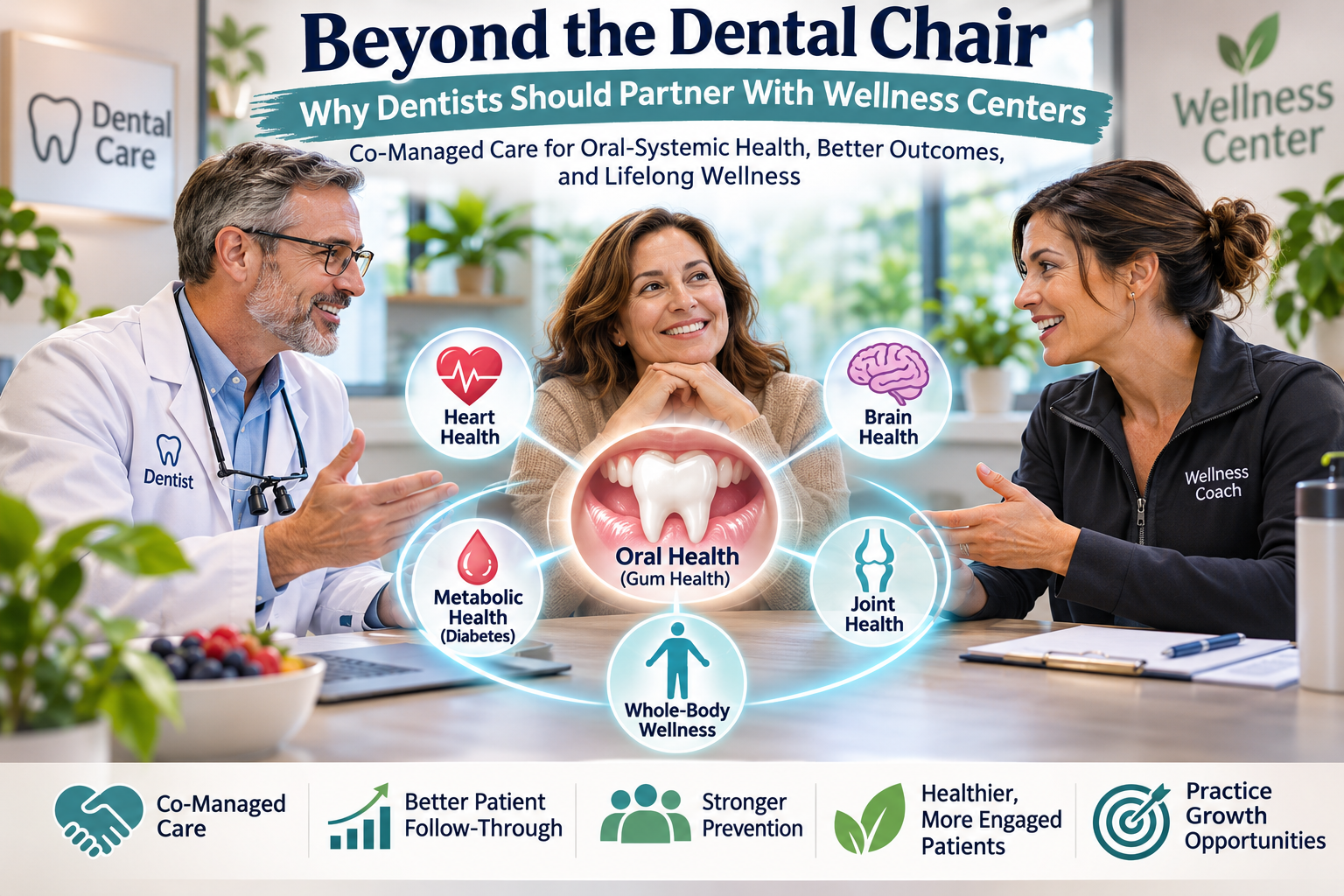
Imagine a relationship where a wellness coach and a dentist become co-advocates for the same person’s long-term health.
Rather than working independently, each professional reinforces the other’s efforts while remaining within their respective scope of practice.
The dentist addresses oral disease. The wellness coach supports the daily behaviors that help clients maintain a healthier lifestyle. Together, they reinforce prevention and personal accountability.
Here is what that partnership could look like.
The Dentist’s Role
The dental professional provides clinical expertise through:
- Comprehensive dental and periodontal examinations.
- Diagnosis and treatment of oral disease.
- Assessment of gum inflammation and dental implant health.
- Personalized recommendations for oral hygiene and professional maintenance.
- Communication with medical professionals when systemic health considerations warrant collaboration.
The Wellness Coach’s Role
The wellness coach supports the client’s self-directed goals through:
- Building consistent brushing and interdental-cleaning habits.
- Encouraging appropriate dental visits and follow-through.
- Addressing lifestyle factors such as tobacco use, nutrition, stress, and sleep.
- Helping clients overcome barriers to maintaining healthy routines.
- Supporting behavior changes recommended by the client’s licensed healthcare team.
- Reinforcing the relationship between oral health and overall wellness.
- Recommend Clean Kiss botanical based mouthwash, toothpaste and oral probiotics to support oral health between dental visits.
When clients consent to appropriate communication, both professionals can help create a more coordinated approach.
This is co-advocacy—not a replacement for professional dental care, but a partnership that strengthens it.
Five Practical Ways to Add Oral Health to Your Wellness Coaching Services
1. Add Oral Health to Your Wellness Intake
Include a short oral-health history in your existing wellness questionnaire.
Ask how frequent dental cleanings are recommended by their dentist and when their next appointment is scheduled.
You do not need an additional clinical examination. Simply recognizing that oral health is relevant to overall health can help identify opportunities for education and professional referral.
2. Include Oral Care in Daily Habit Coaching
Many clients already track their steps, hydration, sleep, and meals.
Why not include oral-care consistency?
Help clients establish a realistic daily routine that includes twice-daily brushing with cleankiss.com mouthwash, toothpaste, daily interdental cleaning, and any personalized instructions from their dentist.
Small, consistent behaviors are central to successful wellness coaching.
3. Build Relationships With Oral-Systemic Health Dentists
Not every dental practice approaches care from the same perspective.
Seek relationships with dentists who recognize the importance of periodontal health, the oral microbiome, inflammation, and medical-dental communication.
Introduce yourself as a wellness professional interested in supporting patients between dental appointments.
A dentist may appreciate having a trusted wellness coach who helps clients sustain healthy routines. Likewise, you gain access to a qualified dental referral partner when oral-health concerns arise.
Consider TheMeditzMethod.com oral systemic health coaching specifically designed for dentist collaboration.
4. Educate Clients About Oral Inflammation
Offer evidence-based educational discussions about the oral-systemic connection.
Topics might include:
- Why healthy gums matter to whole-body wellness.
- The relationship between diabetes and periodontal disease.
- How tobacco use affects oral and systemic health.
- Why dental implants require ongoing preventive care.
- The importance of maintaining a balanced oral microbiome.
Education can create awareness without turning wellness coaching into dental treatment.
5. Create a Two-Way Referral and Follow-Up Relationship
With client permission and appropriate privacy safeguards, develop a simple referral process with participating dental practices.
For example:
The wellness coach identifies an oral-health concern → The client visits a dentist → The dentist establishes any necessary treatment and home-care recommendations → The wellness coach helps the client build sustainable habits and follow through.
The process can work in reverse.
A dentist treating a patient with periodontal disease may recognize that the patient needs additional support with smoking cessation, stress management, or consistent daily routines.
A wellness coach may be an ideal accountability partner.
The result is a more connected experience for the client.
A New Opportunity for Wellness Coaching Practices
Including oral health does not require expensive equipment, additional clinical credentials, or an entirely new business model.
It can begin with education, collaboration, and a few thoughtful additions to an existing wellness program.
Over time, wellness coaches could develop specialized services such as oral-systemic health awareness workshops, healthy-habit coaching for dental patients, or collaborative wellness programs with participating dental practices.
These services may create opportunities for professional referrals, stronger client engagement, and greater differentiation in an increasingly competitive wellness industry.
However, any paid collaborative arrangement should be transparent and comply with applicable professional, privacy, and referral laws.
The goal is not to create another service simply to generate revenue.
The goal is to deliver more comprehensive wellness support by addressing an important piece of health that has historically been overlooked.
The Meditz Method™: Helping Bridge the Gap
The Meditz Method™ was developed around a fundamental principle:
Oral health and whole-body health should not be treated as separate conversations.
By helping dental professionals and wellness coaches build an oral-systemic health culture, The Meditz Method™ emphasizes prevention, periodontal health, patient education, medical-dental collaboration, and sustainable daily care.
That philosophy creates a natural opportunity to include wellness coaches in the larger health conversation.
Wellness coaches bring expertise in motivation, behavioral change, and long-term accountability. Dental professionals bring the clinical expertise needed to identify, treat, and monitor oral disease.
Together, they can encourage clients to become active participants in protecting both their oral health and overall well-being.
The Future of Wellness Is Collaborative
True wellness is not achieved by addressing one organ, one symptom, or one lifestyle habit at a time.
It requires understanding how different aspects of health interact—and recognizing when collaboration can help.
Wellness coaches are uniquely positioned to help bridge the gap between professional healthcare recommendations and the everyday behaviors that support better health.
By introducing oral-health awareness, establishing relationships with oral-systemic health dentists, and encouraging client-centered co-advocacy, wellness coaches can expand the value of their services without stepping outside their professional boundaries.
The mouth is part of the body. Isn’t it time our wellness programs reflected that?
Ready to Build a Bridge Between Wellness Coaching and Oral-Systemic Health?
Whether you are a wellness coach interested in expanding your impact or a dental professional looking for stronger patient support beyond the dental chair, collaboration begins with a conversation.
Explore how The Meditz Method™ can help connect oral health education, prevention, and whole-body wellness.
Visit TheMeditzMethod.com to learn more.
Research and Professional References
- American Dental Association. Oral-Systemic Health. https://www.ada.org/resources/ada-library/oral-health-topics/oral-systemic-health
- Centers for Disease Control and Prevention. Promoting Oral Health for People With Diabetes. https://www.cdc.gov/diabetes/hcp/clinical-guidance/how-to-promote-oral-health-for-people-with-diabetes.html
- National Board for Health & Wellness Coaching. Health & Wellness Coach Scope of Practice. https://nbhwc.org/scope-of-practice/
- Health Resources and Services Administration. Integration of Oral Health and Primary Care Practice. https://www.hrsa.gov/sites/default/files/hrsa/oral-health/integration-oral-health.pdf
- Centers for Medicare & Medicaid Services. Strategies and Promising Practices in Coordinating Dental Care for Dually Eligible Individuals. https://www.cms.gov/files/document/ricresource-coordinatingdentalcareforduallyeligibleindividuals-guide.pdf
Professional note: Health and wellness coaching scope varies by credentials and jurisdiction. Coaches should use appropriate referrals and avoid diagnosis, clinical treatment, or prescribing unless separately qualified and authorized.