Periodontal therapy has changed dramatically.
For decades, the primary nonsurgical approach to periodontal disease has centered on scaling and root planing—physically disrupting biofilm and removing calculus from diseased root surfaces.
Mechanical debridement remains foundational. But today, dental professionals have additional technologies designed to help reduce bacteria, manage inflamed tissue, remove diseased or necrotic tissue, improve the periodontal environment, and potentially support healing.
Three terms frequently heard in progressive periodontal practices are:
LAPT — Laser-Assisted Periodontal Therapy
LANAP® — Laser-Assisted New Attachment Procedure
Ozone Therapy
They are sometimes discussed as though they are interchangeable.
They are not.
Understanding the differences can help dental teams build periodontal protocols based on the patient’s condition rather than simply choosing a technology.
First: The Foundation Is Still Biofilm and Calculus Control
Periodontitis is a biofilm-driven inflammatory disease.
Regardless of whether a laser or ozone is added, the clinician still has to address the fundamental causes of disease:
- Pathogenic subgingival biofilm
- Calculus and contaminated root surfaces
- Periodontal pocketing
- Chronic inflammation
- Diseased or necrotic tissue
- Occlusal and structural risk factors
- Patient home-care effectiveness
- Smoking and other behavioral risks
- Metabolic and systemic factors that can influence healing
Mechanical periodontal therapy remains the foundation. Adjunctive technologies may provide additional benefits, but they generally build upon—not replace—thorough periodontal debridement.
That distinction is critical.
What Is LAPT?
LAPT stands for Laser-Assisted Periodontal Therapy.
Unlike LANAP®, LAPT is not one single standardized or proprietary periodontal protocol.
It is a broader description of periodontal treatment in which a dental laser is incorporated into nonsurgical or surgical periodontal therapy.
Depending on the system and clinician, lasers used may include:
- Diode lasers
- Nd lasers
- Er lasers
- Other laser wavelengths and photodynamic techniques
One of the important functions of laser-assisted periodontal therapy is the ability to ablate diseased, inflamed, and necrotic soft tissue within the periodontal pocket.
Depending on the wavelength, settings, and protocol, laser energy can selectively remove or de-epithelialize unhealthy pocket tissue while simultaneously helping reduce bacterial burden and control bleeding.
This is a significant distinction from mechanical instrumentation alone.
Scaling and root planing primarily address calculus, biofilm, and contaminated root surfaces.
LAPT can add another dimension by addressing the diseased soft-tissue component of the periodontal pocket.
The Potential Advantages of LAPT
Laser-assisted therapy may help clinicians:
- Ablate inflamed, diseased, or necrotic pocket tissue
- Reduce bacterial burden
- Remove diseased pocket epithelium
- Improve access to the periodontal environment
- Assist with hemostasis
- Reduce inflammation
- Support the formation of a cleaner wound environment
- Complement scaling and root planing
However, wavelength matters.
Different lasers interact differently with:
- Water
- Hemoglobin
- Melanin
- Soft tissue
- Hard tissue
- Calculus
This means that simply saying a patient received “laser periodontal therapy” does not tell us exactly what treatment was performed.
The effectiveness and tissue interaction depend heavily on the laser wavelength, energy settings, technique, and treatment protocol.
So LAPT is best viewed as an umbrella category rather than a single treatment.
What Is LANAP®?
LANAP stands for:
Laser-Assisted New Attachment Procedure.
This is much more specific.
LANAP is a defined periodontal protocol performed with a particular free-running, pulsed 1064-nm Nd laser system as part of a multi-step treatment sequence.
The protocol does not simply involve placing a laser into a periodontal pocket.
It combines laser treatment with mechanical instrumentation and other clinical steps.
The first laser pass is used to interact with diseased pocket epithelium and infected tissue while reducing bacterial burden.
Mechanical instrumentation then removes calculus and root deposits.
A subsequent laser pass is used to create hemostasis and help establish a stable fibrin clot against the root surface.
What Makes LANAP Different?
One of the most important distinctions is the research into periodontal regeneration.
Human histologic studies have demonstrated formation of new cementum and new connective-tissue attachment following LANAP treatment in some treated sites.
Additional investigations have also reported evidence of periodontal regeneration—including new cementum, periodontal ligament, and alveolar bone—in some treated teeth.
The important point is this:
LANAP is not synonymous with generic laser periodontal therapy.
It is a specific protocol performed with a specific laser platform and treatment sequence.
What About Ozone Therapy?
Ozone takes a different approach.
Dental ozone can be delivered in different forms, including:
- Ozonated water
- Ozone gas
- Ozonated oils
- Ozonated gels
Rather than using laser energy to remove diseased tissue, ozone is primarily used for its antimicrobial and oxidative properties.
In periodontal treatment, it is generally considered an adjunct to mechanical debridement.
Why Is Ozone Interesting?
One challenge in periodontal treatment is the microbial ecosystem deep within the periodontal pocket.
Many important periodontal pathogens thrive in low-oxygen environments.
Ozone provides powerful oxidative activity that can disrupt microorganisms and may help change the local microbial environment after mechanical biofilm disruption.
This creates an important distinction between ozone and LAPT.
Ozone primarily targets microorganisms and the microbial environment.
LAPT can both reduce bacterial burden and physically ablate diseased, inflamed, or necrotic soft tissue.
Ozone should therefore not be viewed as a substitute for tissue removal or scaling and root planing.
It is more appropriately considered an antimicrobial adjunct that can be incorporated into a broader periodontal treatment protocol.
LAPT vs. LANAP vs. Ozone at a Glance
| Therapy | Primary Role | Technology | Ablates Diseased/Necrotic Tissue? | Mechanical Debridement Still Needed? | Regenerative Evidence |
|---|---|---|---|---|---|
| LAPT | Adjunct to periodontal treatment | Various dental laser wavelengths | Yes, depending on wavelength and protocol | Yes | Depends heavily on laser and protocol |
| LANAP® | Defined periodontal surgical/regenerative protocol | 1064-nm pulsed Nd | Yes, as part of the protocol | Yes | Human histologic evidence exists |
| Ozone | Antimicrobial adjunct | Ozone gas, water, gel or oil | No—primarily antimicrobial | Yes | Not primarily a regenerative protocol |
This comparison exposes an important misconception:
The real question is usually not “laser or ozone?”
They perform different functions.
Could Laser Therapy and Ozone Be Complementary?
Potentially.
Think about periodontal therapy as addressing several different biological problems.
Mechanical instrumentation disrupts biofilm and removes calculus.
Laser therapy can add another layer by:
- Ablating diseased or necrotic soft tissue
- Removing unhealthy pocket epithelium
- Reducing portions of the microbial load
- Providing hemostasis
- Creating a cleaner tissue environment
- Supporting wound healing
Ozone can add yet another antimicrobial strategy by helping reduce microorganisms within the periodontal environment.
These approaches are therefore not necessarily competitors.
They can represent different tools aimed at different components of periodontal disease.
But adding technology only makes sense when there is a clearly defined purpose.
More technology does not automatically mean better periodontal therapy.
The Meditz Method™ Perspective: Treat the Environment, Not Just the Pocket
At The Meditz Method™, we believe periodontal treatment should extend beyond asking:
“How deep is the pocket?”
We should also be asking:
Is diseased or necrotic tissue still present?
Has the pathogenic biofilm been disrupted?
Has calculus been thoroughly removed?
Why did the disease develop?
Why is inflammation continuing?
Is the patient’s home-care routine controlling the biofilm between visits?
Are systemic inflammatory or metabolic factors interfering with healing?
Has the periodontal environment actually changed—or have we simply cleaned it temporarily?
That means periodontal therapy may include several layers:
Diagnose → Debride → Ablate diseased tissue → Reduce pathogens → Support healing → Improve home care → Measure → Maintain
Technology belongs inside that strategy.
It should never become the strategy itself.
Where Home Care Becomes Critical
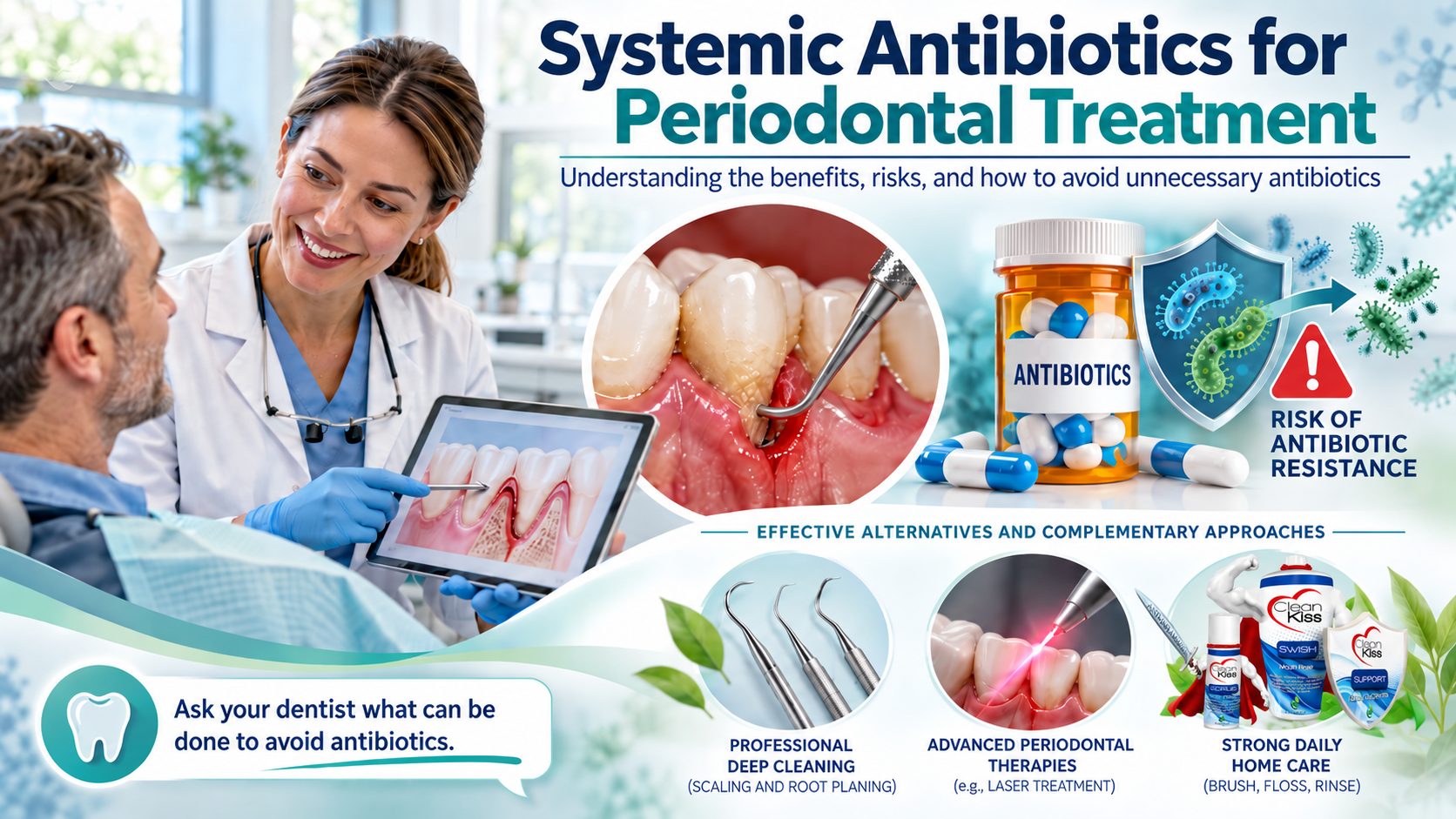
Whether a clinician uses LAPT, LANAP, ozone, conventional periodontal therapy, or some combination of these approaches, the dental office controls the periodontal environment for only a short period of time.
The patient controls it every day.
That is why periodontal therapy must include a repeatable home-care protocol designed to continually disrupt biofilm and support a healthier oral environment.
The objective should not simply be to “kill everything.”
The mouth contains a complex microbiome.
The long-term goal is to reduce conditions that favor pathogenic organisms while supporting an oral environment compatible with health.
This is where Swish, Floss, and Brush becomes more than a slogan.
It becomes daily periodontal maintenance.
There Is No Silver Bullet
LAPT is not a silver bullet.
LANAP is not a silver bullet.
Ozone is not a silver bullet.
Scaling and root planing alone is not always enough either.
Periodontal disease is multifactorial, and successful treatment depends on controlling the factors that allowed disease to progress in the first place.
The future of periodontal care is therefore unlikely to be one technology replacing another.
It is more likely to involve intelligent integration.
Mechanical biofilm disruption.
Removal of calculus.
Ablation of diseased or necrotic tissue when appropriate.
Appropriate use of laser technology.
Selective use of antimicrobial adjuncts such as ozone.
Better diagnostics.
Better home care.
Better measurement.
And closer attention to the relationship between oral inflammation and the health of the rest of the patient.
That is the shift from simply treating periodontal pockets to creating an oral-systemic culture of prevention.
Bottom Line
LAPT is a broad category of laser-assisted periodontal therapy that can reduce microbial burden while also ablating diseased, inflamed, or necrotic soft tissue, depending on the wavelength and protocol used.
LANAP® is a specific Nd treatment protocol that incorporates laser tissue interaction, mechanical debridement, clot formation, and a defined treatment sequence, with published evidence of new periodontal attachment in treated sites.
Ozone is primarily an antimicrobial adjunct. It can help address the microbial environment but does not perform the same tissue-ablation role as laser therapy.
The appropriate question is therefore not:
“Which technology is best?”
It is:
“What combination of diagnostics, debridement, tissue management, antimicrobial therapy, home care, and maintenance gives this particular patient the best opportunity to return to periodontal health—and stay there?”
That is where modern periodontal therapy becomes personalized periodontal medicine.