Why antibiotic resistance matters—and how modern periodontal therapy may help reduce the need for systemic antibiotics.
What if the antibiotic prescribed to help control your gum disease could also create a different health challenge?
Periodontal disease is more than bleeding gums or bad breath. It is a chronic inflammatory disease involving harmful bacterial communities, the body’s immune response, and progressive destruction of the tissues and bone supporting the teeth.
For years, systemic antibiotics have sometimes been prescribed along with periodontal treatment to help control bacterial infections.
Antibiotics can be valuable—and in some situations they may be necessary.
But they are not always necessary.
Growing concern about antibiotic resistance, disruption of beneficial bacteria, and the limitations of antibiotics in treating chronic periodontal infections is encouraging dental professionals and patients to ask an important question:
Can we successfully treat periodontal disease without systemic antibiotics?
Why Are Antibiotics Used in Periodontal Treatment?
Periodontal disease develops when bacterial biofilms accumulate around and beneath the gumline.
As the disease progresses, inflammation can damage the connective tissue and bone supporting the teeth.
Systemic antibiotics are medications taken by mouth that travel throughout the body through the bloodstream. In selected periodontal cases, they may be prescribed as an addition to professional treatment.
Examples may include:
- Amoxicillin
- Metronidazole
- Doxycycline
- Combinations of antibiotics for selected severe cases
These medications may provide additional benefits for appropriately selected patients.
However, antibiotics alone cannot physically remove the bacterial biofilm, calculus, and deposits associated with periodontal disease.
That requires professional periodontal treatment.
The Growing Concern: Antibiotic Resistance
One of the most important concerns surrounding unnecessary antibiotic use is antibiotic resistance.
Antibiotics are designed to kill bacteria or stop them from multiplying.
But bacteria can adapt.
When antibiotics are used, susceptible bacteria may be eliminated while resistant bacteria survive. Those resistant organisms can then multiply and spread.
Over time, infections caused by resistant bacteria may become much more difficult to treat.
An important distinction: Your body does not become resistant to antibiotics. The bacteria become resistant.
Why should this matter to a dental patient?
Because antibiotics are not just used for periodontal disease.
They are critical medicines for treating potentially serious infections throughout the body.
Preserving their effectiveness may be extremely important to your future health.
Antibiotics Can Affect More Than Harmful Bacteria
The human body contains trillions of microorganisms.
Many of them are beneficial.
Our oral and intestinal microbiomes play important roles in digestion, immune function, metabolism, and protection against potentially harmful organisms.
Systemic antibiotics do not exclusively target the bacteria associated with periodontal disease.
They can also alter beneficial bacterial populations.
Depending on the antibiotic and the individual, possible adverse effects can include:
- Digestive upset
- Diarrhea
- Allergic reactions
- Changes in the intestinal microbiome
- Changes in microbial balance
- Increased risk of certain opportunistic infections
This raises an important oral-systemic health question:
If periodontal disease can be effectively managed with localized professional treatment, why expose the entire body to an antibiotic unnecessarily?
Why Antibiotics Alone Cannot Fix Periodontal Disease
Periodontal bacteria do not simply float freely around the mouth.
They organize into communities called biofilms.
Biofilms attach to teeth and root surfaces and develop a protective structure that can make the microorganisms within them more difficult to eliminate.
Antibiotics may reduce susceptible bacterial populations, but they cannot physically remove:
- Calculus
- Established biofilm
- Contaminated deposits beneath the gums
- Diseased tissue
- Factors that allow periodontal pockets to remain infected
This is why professional periodontal treatment is so important.
If the source of the infection is not addressed, the disease may continue or return after an antibiotic is discontinued.
Scaling and Root Planing: Remove the Source
Scaling and root planing, sometimes called a deep cleaning, remains a foundational nonsurgical treatment for periodontal disease.
The objective is to remove plaque, calculus, and bacterial deposits from tooth and root surfaces beneath the gumline.
Reducing the bacterial burden allows the tissues an opportunity to heal.
For many patients, effective periodontal instrumentation combined with excellent home care and appropriate maintenance may help control periodontal disease without systemic antibiotics.
Can Advanced Periodontal Therapies Help?
Today’s dental practices may have additional technologies available to support conventional periodontal treatment.
The important word is support.
These therapies should not automatically be viewed as replacements for thorough periodontal debridement or for antibiotics when an antibiotic is medically necessary.
Laser-Assisted Periodontal Therapy
Laser-assisted periodontal therapy, or LAPT, may be incorporated into periodontal treatment protocols.
Depending on the laser, wavelength, and clinical protocol, laser therapy may help:
- Reduce certain microorganisms within periodontal pockets
- Ablate diseased or necrotic soft tissue
- Assist in managing inflamed periodontal tissues
- Provide hemostasis
- Complement traditional periodontal instrumentation
Laser therapy should be considered part of an individualized treatment strategy rather than a universal replacement for conventional periodontal therapy.
Ozone Therapy
Ozone has antimicrobial properties and has also been investigated as an adjunct to periodontal treatment.
Dental ozone may be delivered through specialized protocols using ozone gas, ozonated water, or other professionally administered applications.
Research continues to evaluate its role in reducing microorganisms and supporting periodontal treatment.
Like laser therapy, ozone should not be presented as a replacement for appropriate periodontal debridement or for medically necessary antibiotics.
Look Beyond the Bacteria
Successfully treating periodontal disease requires more than simply trying to kill bacteria.
The patient’s overall health can dramatically influence periodontal inflammation and healing.
Important factors may include:
- Diabetes and elevated blood glucose
- Smoking
- Oral hygiene
- Diet
- Medications
- Immune function
- Dry mouth
- Nutritional status
- Existing systemic inflammation
For example, poorly controlled blood glucose can make periodontal disease more difficult to manage.
In appropriate patients, measurements such as A1c may provide valuable information and encourage collaboration between dental and medical professionals.
This is one reason periodontal treatment should be personalized.
What Happens at Home Matters
Periodontal therapy does not end when you leave the dental office.
Bacterial biofilm begins reforming quickly.
Consistent home care is essential for maintaining the improvements achieved during professional treatment.
A simple daily sequence is:
SWISH. FLOSS. BRUSH.
Swish as appropriate for your home-care program.
Floss or clean between the teeth at least once each day.
Brush thoroughly twice daily with a soft-bristled toothbrush and an appropriate toothpaste.
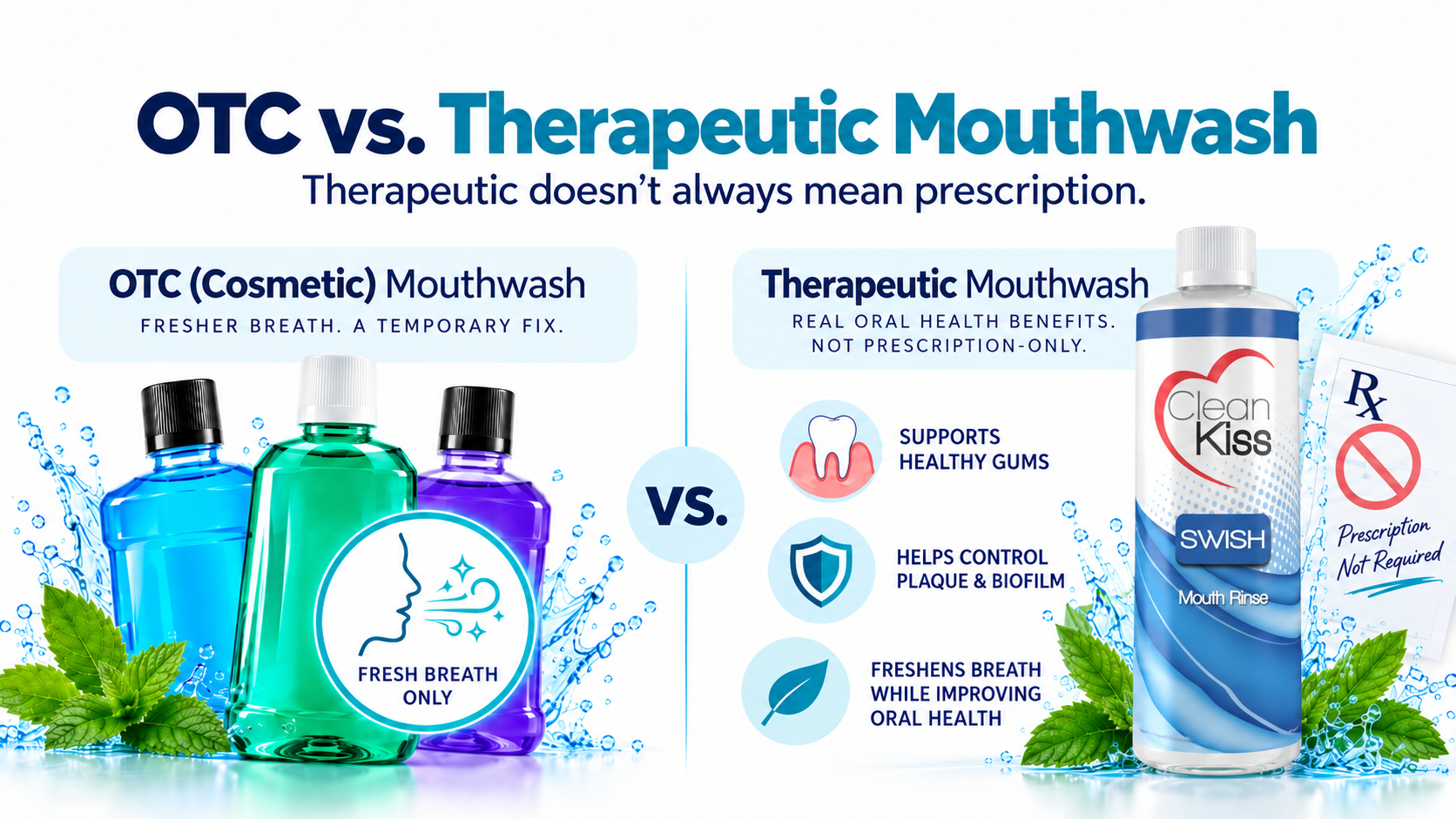
Clean Kiss Swish and Scrub can be incorporated into a home-care program designed to support a cleaner oral environment and consistent daily plaque control.
The Clean Kiss system is not intended to replace professional periodontal treatment.
Instead, home care and professional care should work together.
When Might Systemic Antibiotics Be Necessary?
Avoiding unnecessary antibiotics does not mean antibiotics should never be used.
There are circumstances in which systemic antibiotics can be extremely valuable.
They may be considered in selected cases involving:
- Certain severe or rapidly progressing periodontal infections
- Spreading bacterial infections
- Fever or other systemic signs of infection
- Certain periodontal abscesses
- Specific medical circumstances
- Patients whose overall health places them at increased risk from infection
The decision should be based on the patient’s diagnosis, severity of infection, medical history, and response to treatment.
If your dentist or physician has already prescribed an antibiotic, do not stop taking it or alter the prescription without discussing it with the prescribing healthcare professional.
Antibiotic Stewardship: The Right Drug for the Right Patient
The goal of antibiotic stewardship is not to eliminate antibiotics.
It is to preserve these powerful medications by using them appropriately.
That means:
The right patient.
The right condition.
The right antibiotic.
The right dose.
The right duration.
And only when there is a meaningful clinical reason to use it.
When definitive dental treatment can address the source of an infection, that treatment should remain an important part of the solution.
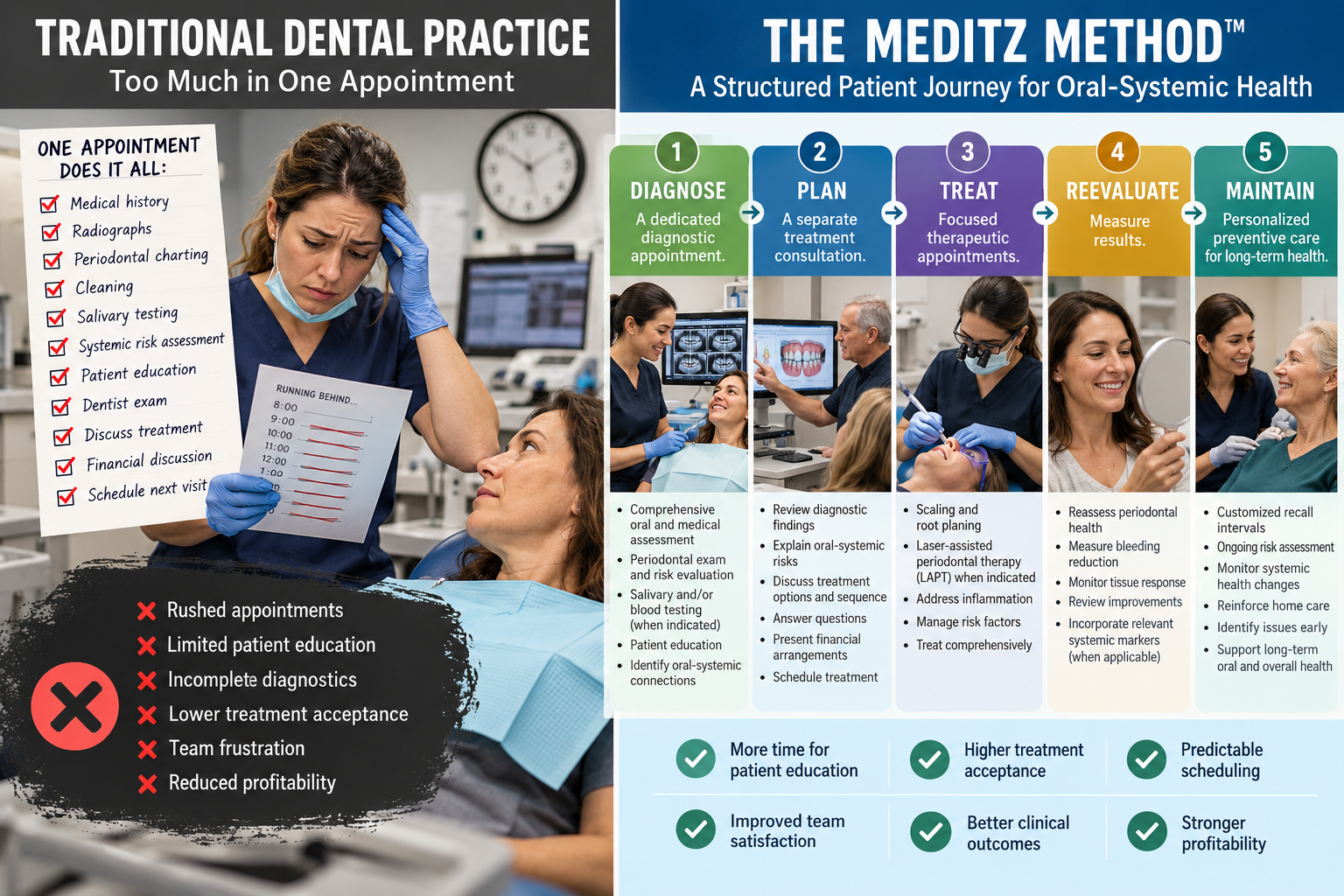
The Meditz Method™: Treat the Whole Picture
The Meditz Method™ approaches periodontal disease as part of a larger oral-systemic health picture.
Instead of simply asking:
“How do we kill these bacteria?”
We should also ask:
Why did the disease develop?
What is sustaining the inflammation?
What health conditions could be interfering with healing?
How can we remove the bacterial burden?
How can we improve the patient’s daily oral environment?
How can we reduce the likelihood that the disease will return?
A comprehensive approach may combine:
- Professional periodontal treatment
- Advanced periodontal technologies when appropriate
- Medical-dental collaboration
- Evaluation of systemic risk factors
- Consistent periodontal maintenance
- Effective daily home care
There is no single silver bullet.
Long-term periodontal stability usually requires several pieces working together.
The Most Important Question to Ask Your Dentist
If you have periodontal disease and systemic antibiotics are being considered, become an active participant in your treatment.
Ask your dentist:
“What can we do to successfully treat my periodontal disease while avoiding systemic antibiotics if they aren’t medically necessary?”
Then ask about your options.
Could scaling and root planing control the infection?
Would laser-assisted periodontal therapy be appropriate?
Are there other localized treatment options?
Are health conditions such as elevated blood glucose contributing to the problem?
Does your home-care routine need to change?
How will the periodontal pockets be reevaluated after treatment?
And most importantly:
“Why is an antibiotic necessary in my particular case?”
Final Thought
Antibiotics are among the most important medicines ever developed.
We want them to work when we truly need them.
That is exactly why unnecessary antibiotic use deserves careful consideration.
Modern periodontal treatment should focus on removing the cause of disease, reducing inflammation, improving the oral environment, supporting healing, and protecting long-term oral and systemic health.
Sometimes an antibiotic is the right choice.
Sometimes it isn’t.
At your next periodontal visit, ask one simple question:
“What can be done to treat my periodontal disease without systemic antibiotics?”
The answer could lead to a more comprehensive and personalized approach to your periodontal health.
References
- American Dental Association. Antibiotic Stewardship.
https://www.ada.org/resources/ada-library/oral-health-topics/antibiotic-stewardship - American Dental Association. Nonsurgical Treatment of Periodontitis Clinical Practice Guideline.
https://www.ada.org/resources/research/science/evidence-based-dental-research/nonsurgical-treatment-of-periodontitis-guideline - European Federation of Periodontology. Treatment of Stage I–III Periodontitis: Clinical Practice Guideline.
https://pmc.ncbi.nlm.nih.gov/articles/PMC7891343/ - Centers for Disease Control and Prevention. Antibiotic Use and Antimicrobial Resistance.
https://www.cdc.gov/antibiotic-use/ - Centers for Disease Control and Prevention. About C. difficile.
https://www.cdc.gov/c-diff/about/
This article is for educational purposes and is not intended to diagnose disease or replace individualized dental or medical care. Decisions regarding periodontal therapy and antibiotic use should be made with a qualified dental or medical professional.